Legumes and Health: What Research Says About Diabetes Risk
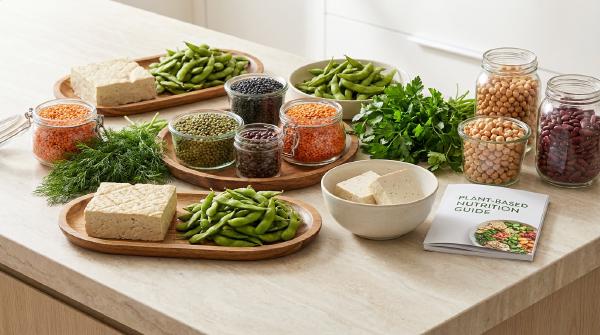
Beans, peas, lentils, chickpeas, and soybeans are familiar foods, yet they remain underrepresented in many diets. These foods provide plant-based protein, dietary fiber, vitamins, minerals, and other compounds that can support a balanced eating pattern.
Research increasingly links regular legume consumption with favorable cardiometabolic health outcomes. A study published in Current Developments in Nutrition in June 2026, for example, found that higher pulse intake was associated with a lower prevalence of cardiometabolic disease among nearly 47,000 US adults. Other research has investigated how legumes and soy products relate to blood pressure, cholesterol, cancer, sleep, and inflammation.
However, these findings need to be interpreted carefully. An association between eating a particular food and a lower disease prevalence does not necessarily prove that the food directly prevents the disease. Results can also differ depending on the type of legume, the amount consumed, and the study design.
🫘 1. Legumes and Diabetes: What the 2026 Study Found #
A study published in the June 2026 issue of Current Developments in Nutrition examined the relationship between pulse consumption and cardiometabolic health in 46,939 US adults.
Researchers used data from the National Health and Nutrition Examination Survey (NHANES) collected between 1999 and 2018. Pulses in this study included beans, peas, lentils, and chickpeas.
Rather than tracking a single group of participants for nearly 20 years, the researchers analyzed population survey data collected across that period. Their findings therefore describe associations with existing disease prevalence, not proof that eating more pulses prevents people from developing diabetes.
Key findings #
The study reported that each additional 1 ounce (approximately 28 grams) of daily pulse intake was associated with:
- 19% lower prevalence of cardiometabolic disease overall in the fully adjusted analysis.
- 20% lower prevalence of diabetes in a sensitivity analysis that excluded body mass index (BMI) from the statistical model.
The diabetes result requires particular care: it appeared in the sensitivity analysis, not as a statistically significant finding in the main fully adjusted model. The researchers also found no significant differences in the overall associations across the demographic groups examined.
Why might legumes support blood sugar management? #
Legumes contain a combination of fiber, plant protein, and carbohydrates. Their fiber content can slow digestion and help moderate the rise in blood glucose after a meal. Replacing some refined grains or less nutritious foods with beans and lentils may also improve overall dietary quality.
These characteristics make legumes a useful component of a balanced diet for people concerned about diabetes risk or blood sugar management.
Nevertheless, the 2026 study was observational. It does not establish that adding exactly 28 grams of pulses each day will lower an individual’s diabetes risk by 20%.
❤️ 2. Five Potential Health Benefits of Legumes and Soy Foods #
Legumes encompass several food categories, and their nutritional effects are not identical. Research on dried beans and lentils should not automatically be treated as evidence for every soy product, or vice versa.
2.1 Blood pressure: A favorable association #
A systematic review and dose-response meta-analysis published in BMJ Nutrition, Prevention & Health in 2026 examined 12 prospective studies on legume and soy consumption and hypertension.
Comparing people with the highest and lowest intake levels, the researchers found:
- Legumes: 16% lower risk of developing hypertension.
- Soy foods: 19% lower risk of developing hypertension.
The dose-response analysis suggested that consuming around 170 grams of legumes per day was associated with approximately 30% lower hypertension risk. For soy foods, the estimated association reached roughly 28–29% lower risk at around 60–80 grams per day.
These are observational estimates from pooled studies, not guaranteed effects of eating a specific serving. Differences in diet, lifestyle, and study populations may help explain some of the results.
2.2 Cholesterol: Soy protein may help lower LDL #
A 2019 meta-analysis published in The Journal of Nutrition examined 46 controlled trials identified by the US Food and Drug Administration.
Across the trials included in the final analyses, a median intake of 25 grams of soy protein per day over a median period of six weeks was associated with the following changes compared with non-soy protein controls:
| Measurement | Average reduction |
|---|---|
| LDL cholesterol | 4.76 mg/dL |
| Total cholesterol | 6.41 mg/dL |
The researchers concluded that soy protein reduced LDL cholesterol by approximately 3–4% on average.
LDL cholesterol is commonly called “bad cholesterol” because elevated levels are associated with greater cardiovascular risk. Although the average reduction was modest, replacing some other protein sources with soy protein may contribute to a heart-healthy dietary pattern.
The findings refer to grams of soy protein, not grams of tofu or soybeans. The protein content of each food varies.
2.3 Cancer: Promising findings, but causation remains uncertain #
A 2024 systematic review and meta-analysis in Nutrients examined 52 observational studies of soy-product consumption and overall cancer risk.
The analysis found that higher consumption of total soy products, tofu, and soy milk was associated with lower overall cancer risk. However, the strength of the association differed by product and study design.
The researchers reported that an additional 54 grams of total soy products per day was associated in their dose-response analysis with approximately 11% lower cancer risk. An additional 61 grams of tofu per day was associated with approximately 12% lower risk, while an additional 23 grams of soy milk per day was associated with approximately 28% lower risk.
These figures are statistical estimates from observational research. They do not mean that adding a certain amount of soy will directly prevent cancer. Notably, several associations were weaker or statistically nonsignificant when the researchers examined prospective cohort studies separately.
2.4 Sleep: Soy intake has been linked to lower insomnia symptoms #
A 2025 cross-sectional study published in Nature and Science of Sleep examined soy-product intake and insomnia among Chinese middle-aged and older adults.
Researchers found that higher soy-product intake was associated with lower insomnia severity scores. Intake was also negatively associated with certain inflammatory markers, including C-reactive protein and tumor necrosis factor-alpha.
Because the study was cross-sectional, it cannot establish whether soy consumption improves sleep. Other factors, including overall diet, health status, physical activity, and lifestyle, may influence both food choices and sleep quality.
The findings offer a possible direction for future research, but soy foods should not be regarded as a proven treatment for insomnia.
2.5 Inflammation: Evidence remains mixed #
Legumes contain fiber and other compounds that may influence inflammatory processes. Researchers have therefore investigated whether eating more beans and lentils changes biomarkers associated with chronic inflammation.
The evidence is not yet consistent. A 2024 systematic review and meta-analysis of randomized controlled trials involving non-soy legumes found that legume consumption increased adiponectin and reduced interleukin-1 beta (IL-1β) in the analyzed studies.
However, the overall effects on C-reactive protein (CRP), interleukin-6 (IL-6), and tumor necrosis factor-alpha (TNF-α) were not statistically significant.
These results suggest that legumes may influence some markers of inflammation, but it would be premature to conclude that they consistently lower all major inflammatory biomarkers or independently prevent chronic disease.
🥣 3. How Much Soy Should You Eat Each Day? #
Soybeans provide plant protein, unsaturated fats, and several vitamins and minerals. They can be eaten whole or used to make foods such as tofu, soy milk, and dried tofu.
China’s National Health Commission has recommended that adults consume an average of 15–25 grams of soybeans per day, or an equivalent amount of soy products. Its guidance also notes that more than two-thirds of Chinese residents fall short of this recommendation.
The recommendation refers specifically to soybeans and soy foods. It should not be interpreted as a universal daily target for every type of pulse.
Practical soybean equivalents #
The Chinese health guidance provides the following approximate equivalents for 20 grams of soybeans:
| Soy food | Approximate equivalent |
|---|---|
| Firm tofu | 60 grams |
| Soft tofu | 110 grams |
| Dried tofu | 45 grams |
| Soy milk | 300 grams |
Actual equivalents vary with water content, preparation method, and product formulation. These values are practical estimates rather than exact nutritional conversions.
You do not need to eat the same soy food every day. Tofu, unsweetened soy milk, cooked soybeans, and other soy products can be incorporated into meals in different ways.
🌾 4. Know the Difference Between Soybeans and Other Beans #
The term “legumes” covers a broad group of foods, but different types have different nutritional profiles.
Soybeans and soy foods #
Soybeans, black soybeans, and green soybeans are valued for their protein content. Common foods made from soybeans include tofu, soy milk, dried tofu, and tofu skin.
These are useful plant-based protein sources, particularly for people who eat little or no meat.
Beans, peas, lentils, and chickpeas #
Dried red beans, mung beans, kidney beans, lentils, peas, and chickpeas provide fiber, carbohydrates, and varying amounts of protein.
Many of these foods are starch-rich and can contribute to the carbohydrate portion of a meal. They can be served alongside rice, whole grains, vegetables, or other staple foods.
Combining legumes with grains also helps diversify the amino acids supplied by a meal, although people eating a varied diet do not necessarily need to combine particular plant proteins at every sitting.
The practical goal is variety: include different legumes and soy foods over the course of the week rather than relying on a single product.
🍲 5. Five Practical Rules for Eating Legumes #
Rule 1: Increase your intake gradually #
If beans and lentils are rarely part of your diet, start with modest portions and increase them as tolerated.
A sudden increase in fiber can cause bloating or gas, particularly in people who are not accustomed to eating legumes. Rinsing canned beans and increasing portions gradually may help some people adjust.
Soy foods can also be incorporated gradually through tofu, soy milk, or other familiar dishes.
Rule 2: Choose cooking methods that limit excess fat and salt #
Steaming, boiling, and stewing are convenient ways to prepare legumes and soy products without adding large amounts of oil.
Deep-fried tofu and heavily seasoned bean snacks can contain substantially more fat or sodium than simpler preparations. Frying does not inherently make protein unusable, but frequent consumption of energy-dense, salty foods can make a balanced diet more difficult to maintain.
For everyday meals, consider steamed tofu, bean soups, boiled soybeans, lentil dishes, or beans cooked with vegetables.
Rule 3: Do not treat processed bean snacks as nutritional equivalents #
Packaged snacks such as wasabi peas or garlic-flavored green peas may contain added oil, salt, sugar, or flavorings. Their nutritional profiles depend on the ingredients and processing method.
These snacks can be eaten occasionally, but they are not necessarily equivalent to plain cooked beans or lentils.
Check the nutrition label when choosing packaged products, especially if you are monitoring sodium, added sugar, or total calorie intake.
Rule 4: Account for carbohydrates if you have diabetes #
Legumes can be helpful in a diabetes-friendly eating pattern because their fiber and protein may slow digestion and support more stable post-meal glucose responses.
They nevertheless contain carbohydrates. Portion size and the rest of the meal still matter, and individual glucose responses can differ.
People managing diabetes should consider legumes as part of their overall meal plan rather than assuming that beans, lentils, or bean-based dishes can be eaten without limit.
Rule 5: Adapt intake to individual health needs #
Chronic kidney disease: Do not automatically eliminate all legumes. The appropriate diet depends on kidney function, blood potassium and phosphorus levels, medications, and other individual factors. A clinician or renal dietitian can advise whether particular foods or portions need to be restricted.
Gout: Beans and soy foods provide plant-based protein, and plant purines should not automatically be treated the same as purines from meat and seafood. Individual recommendations depend on the person’s condition, treatment, and overall diet. Follow medical guidance during acute attacks or when adjusting an established diet.
Soy allergy: People with a confirmed soy allergy should avoid soy products that trigger their allergy and seek appropriate medical advice about alternatives.
✅ 6. The Bottom Line: Make Legumes a Regular Part of Your Diet #
Research suggests that higher intake of beans, lentils, peas, chickpeas, and soy foods can fit into a dietary pattern associated with better cardiometabolic health. Studies have reported favorable associations with the prevalence of diabetes and other cardiometabolic conditions, hypertension, cholesterol levels, and several additional health outcomes.
The strength of the evidence varies. Controlled trials provide evidence that soy protein can modestly reduce LDL cholesterol, while many findings about diabetes, cancer, sleep, and long-term disease outcomes come from observational studies that cannot establish cause and effect.
The practical takeaway is straightforward: eat legumes regularly, vary the types you choose, and prepare them in ways that fit your overall nutritional needs. Beans and soy foods are not miracle foods, but they can be affordable, versatile sources of plant protein and fiber that help build a balanced diet.