Why Women Gain Belly Fat After 40: Hormones, Muscle Loss, and Science-Backed Solutions
After discussing the science behind middle-aged weight gain in men, many readers asked an important question: What about women?
Many women notice a frustrating pattern after turning 40. They eat roughly the same—or sometimes even less—than before, yet the number on the scale keeps creeping upward. More noticeably, fat seems to migrate from the hips and thighs to the waistline, making it increasingly difficult to button jeans that fit just a few years ago.
It’s easy to blame a “slow metabolism,” but the reality is far more complex. Midlife weight changes in women are driven primarily by hormonal shifts, changes in body composition, lifestyle factors, and aging—not simply by eating too much.
Understanding these changes is the first step toward managing them effectively.
Perimenopause: When Hormones Change Where Fat Is Stored #
One of the biggest physiological transitions women experience is perimenopause, the years leading up to menopause.
During this stage, ovarian function gradually declines and estrogen production becomes increasingly irregular before eventually falling. Estrogen influences far more than reproductive health—it also helps regulate where the body stores fat.
During the reproductive years, estrogen encourages fat storage around the hips and thighs, creating the classic “pear-shaped” body. As estrogen levels decline, however, fat distribution shifts toward the abdomen and around internal organs.
This doesn’t necessarily mean menopause directly causes major weight gain. Instead, it tends to increase visceral abdominal fat, producing the more “apple-shaped” body pattern commonly seen after menopause.
Visceral fat is more metabolically active than subcutaneous fat and is associated with increased risks of cardiovascular disease, type 2 diabetes, and metabolic syndrome. This is why waist circumference becomes an increasingly important health indicator during midlife.
Muscle Loss Quietly Lowers Daily Energy Expenditure #
Hormones are only part of the picture.
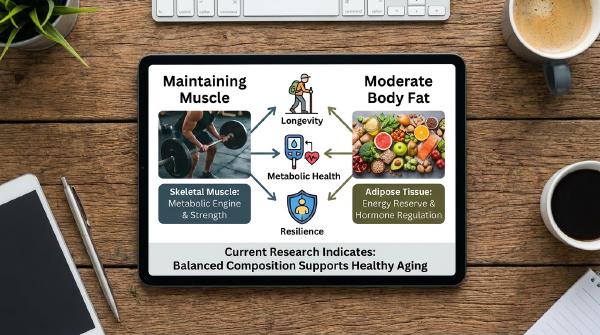
Beginning around age 30, adults naturally lose muscle mass unless they regularly perform resistance training. This gradual decline accelerates with advancing age.
Muscle tissue is metabolically active, meaning it requires energy even at rest. As muscle mass decreases, total daily energy expenditure declines as well.
This process often leads to sarcopenic obesity—a condition where muscle decreases while body fat increases. A person’s weight may remain relatively stable, yet their body fat percentage rises significantly.
As a result, maintaining the same eating habits that worked in your twenties may gradually produce weight gain later in life simply because the body is burning fewer calories throughout the day.
The good news is that muscle is one of the few age-related changes that can be significantly improved through exercise.
Chronic Stress Encourages Belly Fat Accumulation #
Modern midlife often comes with tremendous responsibilities.
Career demands, caring for children, supporting aging parents, financial pressures, and disrupted sleep all contribute to chronic stress.
Long-term stress elevates cortisol, the body’s primary stress hormone.
Persistently elevated cortisol can:
- Increase cravings for calorie-dense comfort foods
- Promote fat storage around the abdomen
- Make weight management more difficult
- Contribute to insulin resistance over time
- Disrupt normal sleep patterns
Unfortunately, stress and weight gain can reinforce each other, creating a cycle that’s difficult to escape without addressing both physical and emotional health.
A Science-Based Strategy for Healthy Weight Management #
Extreme dieting rarely works over the long term and may accelerate muscle loss.
Instead, sustainable improvements come from rebuilding muscle, supporting overall health, and creating habits that remain realistic over time.
Prioritize High-Quality Protein #
Adequate protein intake helps preserve muscle during aging.
Excellent protein sources include:
- Fish
- Seafood
- Lean poultry
- Eggs
- Low-fat dairy products
- Soy foods
- Beans and legumes
Combining sufficient protein with regular resistance exercise provides the strongest stimulus for maintaining lean body mass.
Increase Fiber and Choose Whole Foods #
Dietary fiber supports weight management in several ways.
It:
- Increases fullness after meals
- Helps regulate blood sugar
- Supports digestive health
- Encourages healthier food choices
Replacing refined grains with whole grains such as oats, brown rice, quinoa, or whole-wheat products can improve satiety while increasing overall nutrient intake.
Colorful vegetables, fruits, beans, and legumes should remain the foundation of most meals.
Make Strength Training a Weekly Priority #
Cardio is valuable for heart health, but resistance training becomes increasingly important after age 40.
Training two to three times per week can help:
- Preserve muscle mass
- Improve strength
- Support bone density
- Increase resting energy expenditure
- Improve body composition
- Reduce abdominal fat over time
Effective beginner exercises include:
- Squats
- Glute bridges
- Lunges
- Dumbbell presses
- Rows
- Resistance band exercises
Progressive overload—gradually increasing resistance—is more important than lifting heavy immediately.
Protect Your Sleep #
Sleep is often overlooked in weight management.
Poor sleep affects hormones that regulate hunger, fullness, and stress, making healthy eating substantially more difficult.
Healthy sleep habits include:
- Maintaining a consistent bedtime
- Limiting screen exposure before sleep
- Keeping the bedroom cool and dark
- Avoiding excessive caffeine late in the day
- Practicing relaxation techniques if stress interferes with sleep
Quality sleep supports healthier cortisol regulation and improves recovery from exercise.
Manage Stress as Seriously as Nutrition #
Managing stress is not simply about emotional well-being—it also supports metabolic health.
Helpful approaches include:
- Regular physical activity
- Mindfulness meditation
- Deep breathing exercises
- Time outdoors
- Maintaining social connections
- Setting healthy work-life boundaries
Small, consistent habits often produce greater long-term benefits than occasional intensive efforts.
Long-Term Lifestyle Changes Produce Real Results #
Research consistently shows that women who remain physically active throughout perimenopause and after menopause experience healthier body composition, lower abdominal fat, improved cardiovascular health, and better overall metabolic function.
Even relatively short interventions combining resistance training, balanced nutrition, and regular exercise can improve waist circumference, blood lipid levels, strength, and physical function within several months.
The goal is not to reverse aging but to adapt intelligently to the body’s changing physiology.
The Bottom Line #
Weight changes during midlife are influenced by far more than calories alone.
Declining estrogen shifts fat storage toward the abdomen. Natural muscle loss lowers daily energy expenditure. Chronic stress and poor sleep further complicate metabolism. Together, these factors explain why weight management often becomes more challenging after 40.
Fortunately, these changes are not inevitable or irreversible.
A lifestyle centered on resistance training, adequate protein, fiber-rich nutrition, quality sleep, and effective stress management can significantly improve body composition and overall health.
Rather than chasing quick fixes or blaming yourself for hormonal changes, focus on building habits that support your body through every stage of life. Healthy aging isn’t about perfection—it’s about giving your body the tools it needs to stay strong, resilient, and active for years to come.