Is LDL Cholesterol Really Bad? Understanding LDL-C Targets and Heart Health
For many people, reviewing a routine blood test begins with one number: low-density lipoprotein cholesterol (LDL-C). The moment they notice an elevated result, concern quickly follows, often accompanied by the belief that LDL cholesterol is simply “bad cholesterol” that should be eliminated entirely.
The reality is far more nuanced.
LDL cholesterol is not inherently harmful. In fact, it plays an essential role in human physiology. The real concern is when LDL-C becomes excessive or is poorly controlled, particularly in individuals with existing cardiovascular risk factors.
Understanding what LDL cholesterol actually does—and why treatment goals differ from person to person—is the key to making informed decisions about cardiovascular health.
🩺 Cholesterol Is Essential, Not a Toxic Substance #
Cholesterol often receives an unfair reputation because it is frequently associated with heart disease. However, cholesterol itself is indispensable for life.
Only about 20–30% of circulating cholesterol comes directly from food, while the majority is synthesized by the liver. This continuous production exists because cholesterol serves several critical biological functions.
It is required for:
- Building and maintaining cell membranes
- Producing steroid hormones such as estrogen and testosterone
- Synthesizing vitamin D
- Creating bile acids necessary for fat digestion
- Supporting normal cellular signaling and metabolism
Without sufficient cholesterol, cells cannot function normally. Extremely low cholesterol levels have been associated in some studies with impaired immune function and certain adverse health outcomes, although maintaining appropriate cholesterol balance remains far more important than pursuing the lowest possible value.
The objective is healthy regulation—not elimination.
🚚 Why LDL Cholesterol Becomes a Problem #
If cholesterol is essential, why is LDL cholesterol so closely linked to cardiovascular disease?
The answer lies in its role as a transport system.
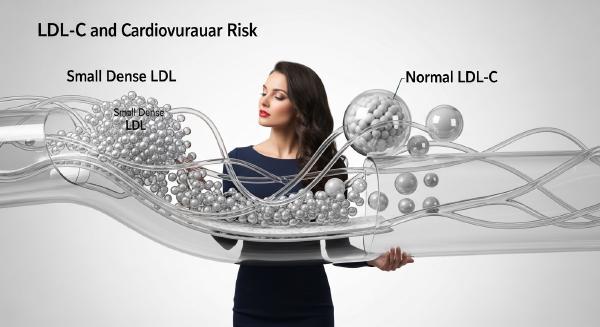
LDL particles function like delivery vehicles, transporting cholesterol from the liver to tissues throughout the body where it is needed for repair, hormone production, and normal cellular activity.
Under healthy conditions, this process is entirely normal.
Problems begin when LDL-C remains elevated over time, especially in the presence of vascular injury caused by factors such as:
- Hypertension
- Smoking
- Diabetes
- Chronic inflammation
- Obesity
- Metabolic syndrome
Damaged arterial walls become more permeable, allowing LDL particles to penetrate beneath the vessel lining. Once trapped, LDL undergoes oxidative modification and triggers an inflammatory response.
Over many years, this process contributes to the formation of atherosclerotic plaques.
As plaques enlarge, arteries gradually narrow, reducing blood flow. More importantly, unstable plaques may rupture, leading to clot formation that can abruptly block an artery.
Depending on the affected vessel, this may result in:
- Myocardial infarction (heart attack)
- Ischemic stroke
- Peripheral arterial disease
Therefore, cardiovascular risk is driven not by cholesterol alone but by persistent elevation of LDL-C combined with vascular injury and inflammation.
🎯 LDL-C Targets Are Personalized #
One of the most common misconceptions is that everyone should aim for the same LDL cholesterol level.
Modern cardiovascular guidelines take a personalized approach based on an individual’s overall cardiovascular risk rather than applying a universal threshold.
Healthy Individuals #
People without major cardiovascular risk factors generally have healthy arterial function and a lower probability of plaque formation.
For many low-risk adults, an LDL-C level below 3.4 mmol/L (approximately 130 mg/dL) is generally considered acceptable.
Moderate- and High-Risk Patients #
Individuals with any of the following conditions require significantly stricter LDL-C control:
- Coronary artery disease
- Previous heart attack
- Coronary stent placement
- Diabetes mellitus
- Chronic kidney disease
- Multiple cardiovascular risk factors
In these populations, existing arterial damage means even modest LDL elevations can accelerate plaque progression.
Recommended treatment goals often include:
- Below 1.8 mmol/L (70 mg/dL) for high-risk patients
- Below 1.4 mmol/L (55 mg/dL) for very high-risk patients
This personalized strategy reflects the principle that the higher the cardiovascular risk, the greater the benefit of aggressive LDL reduction.
📊 Evidence Behind Intensive LDL Lowering #
Lower LDL-C targets are supported by decades of clinical research rather than arbitrary recommendations.
Large meta-analyses consistently demonstrate a near-linear relationship between LDL reduction and cardiovascular risk.
Across numerous randomized clinical trials:
- Every 1 mmol/L reduction in LDL-C lowers the risk of major cardiovascular events by approximately 20–25%.
- Benefits become even more pronounced among individuals with established cardiovascular disease.
Clinical imaging studies have also shown that intensive LDL reduction can slow—or even partially reverse—the progression of atherosclerotic plaque.
For example, trials such as ASTEROID demonstrated that intensive statin therapy capable of reducing LDL-C below approximately 1.8 mmol/L resulted in measurable regression of coronary plaque volume in many patients.
For patients with previous myocardial infarction or coronary intervention, maintaining LDL-C below recommended targets substantially reduces the likelihood of recurrent cardiovascular events.
These findings explain why treatment intensity increases alongside cardiovascular risk.
🥗 Dietary Strategies That Actually Lower LDL-C #
Many people respond to high cholesterol by drastically restricting food intake or eliminating all dietary fat.
This approach is neither sustainable nor particularly effective.
Successful cholesterol management depends on improving dietary quality rather than simply eating less.
Reduce Saturated and Trans Fats #
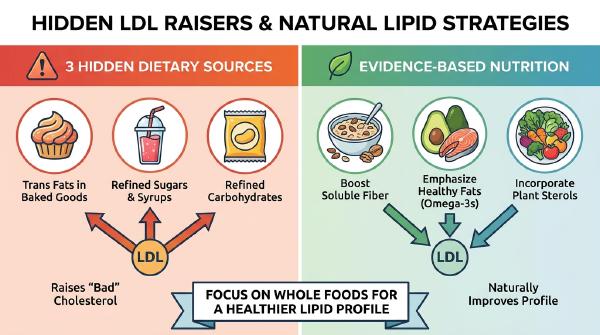
The strongest dietary contributors to elevated LDL-C include saturated fats and industrial trans fats.
Foods to limit include:
- Fatty cuts of red meat
- Processed meats
- Butter and lard
- Commercial baked goods
- Foods containing partially hydrogenated oils
- Highly processed snack foods
Replacing these with healthier alternatives can significantly improve lipid profiles.
Better choices include:
- Olive oil
- Canola oil
- Avocado
- Skinless poultry
- Legumes
- Fish
Increase Soluble Fiber #
Soluble fiber helps reduce cholesterol absorption by binding bile acids within the digestive tract.
Excellent sources include:
- Oats
- Barley
- Brown rice
- Apples
- Citrus fruits
- Eggplant
- Okra
- Beans
Increasing whole grains and fiber-rich fruits and vegetables supports gradual LDL reduction while improving overall metabolic health.
Choose Heart-Healthy Proteins #
Fatty fish such as salmon, sardines, and mackerel provide omega-3 fatty acids that improve lipid metabolism and reduce triglycerides.
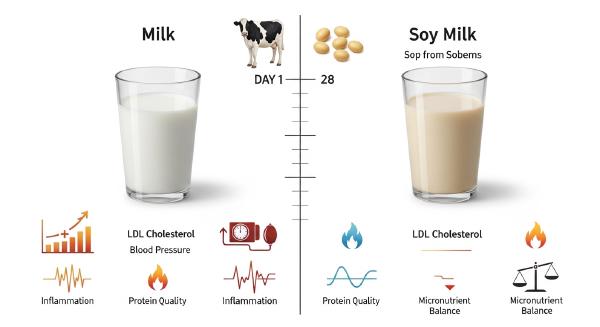
Soy-based foods—including tofu, soy milk, and edamame—contain plant compounds that modestly reduce intestinal cholesterol absorption.
Regular consumption of nuts in moderate portions also contributes to improved cardiovascular health.
Be Careful with Rich Broths #
Bone broth and long-simmered meat soups are often promoted as highly nutritious.
In reality, many contain significant amounts of saturated fat while providing relatively little calcium.
Frequent consumption may contribute to excess calorie intake without offering meaningful cardiovascular benefits.
💊 Lifestyle Changes Are Essential—But Medication May Still Be Necessary #
Lifestyle modification should always be the first step in managing elevated LDL cholesterol.
A comprehensive approach includes:
- Maintaining a heart-healthy diet
- Exercising regularly
- Achieving a healthy body weight
- Avoiding tobacco
- Managing blood pressure and blood sugar
However, lifestyle measures alone are not always sufficient.
For individuals at moderate or high cardiovascular risk, statins and other lipid-lowering medications often provide substantial protection against heart attack and stroke by reducing hepatic cholesterol synthesis and lowering circulating LDL-C.
Patients should never discontinue prescribed medication without consulting their healthcare provider, even if cholesterol values improve.
Effective treatment combines healthy lifestyle habits with evidence-based medical therapy when indicated.
❤️ Managing LDL Cholesterol Is About Balance #
LDL cholesterol is neither inherently good nor inherently bad.
It performs essential biological functions that support normal human health. The danger arises when LDL levels remain elevated long enough to promote plaque formation and vascular disease.
Rather than pursuing the lowest possible cholesterol level, modern cardiovascular medicine emphasizes personalized treatment goals based on individual risk.
For healthy individuals, maintaining LDL-C within an appropriate range helps preserve long-term cardiovascular health. For patients with established cardiovascular disease or diabetes, more aggressive LDL reduction can significantly decrease the risk of future heart attacks and strokes.
Ultimately, every meal, every lifestyle choice, and every treatment decision contributes to the long-term health of your arteries. Managing LDL cholesterol is not about eliminating an essential molecule—it is about keeping it under control so it continues supporting your body without becoming a threat to your cardiovascular system.